Advanced Energy Solutions now has a promotional video! See what all the fuss is about with Infrared technology and what Advanced Energy Solutions can do for you. We offer many more services than shown in the video as well.
Check it out:
As well you can see it on YouTube or on the Advanced Energy Solutions Promo Video page on this site.
Showing posts with label Infrared. Show all posts
Showing posts with label Infrared. Show all posts
24.7.10
7.5.10
Why Thermography?
Why did I get into Thermography? I get this question a lot from clients, friends and family. The answer is quite simply, I enjoy it immensely. The following is a little background into my personal journey into the world of infrared.
 For the last 4 years I have had the luxury of testing out a couple different IR cameras during my daily work. In that time I learned a lot about IR cameras, Electrical Inspections, and Thermographic Surveys.
As the world of infrared became clearer to me, I found myself drawn to learn more about the physics and principles behind it. There is a tremendous amount of information that can be gathered by performing thermographic inspections. The trick is to properly interpret the images. This is indeed an art.
There are many companies out there offering Thermographer training, I have personally experienced several. The amount of knowledge that can be gained by spending time with an experienced thermographer was quite priceless. Personally, I have learned volumes from various texts, reports and regulations available as well. The basics of thermodynamics can be understood by anyone with enough drive and patience (a physics background helps tremendously)
As time went on in my thermal journey I found myself getting more and more comfortable with the principles and physics I was seeing in thermal images. I had concentrated on mainly electrical imaging early on as it was my primary daily use. After gaining quite a bit of experience, the imaging of homes and businesses became more and more appealing.
It was time to make my personal Infrared Camera purchase. This was a big milestone as the pricing of Infrared Cameras restricts many people from joining in. They are quite expensive. A quick Google search will give you an idea of just how much :)

Once I had my own Infrared Camera the rest you could say, is history. I began performing imaging of homes and businesses, gained more knowledge, asked a lot of questions and became quite proficient with the process. Infrared Imaging and reporting is one of my truly enjoyable hobbies, and a pleasant source of income while giving a client a service that they cannot easily get elsewhere.
My Infrared journey has truly been an enjoyable one.
Contact Advanced Energy Solutions for a free quote today!
Back to Advanced Energy Solutions Thermography Home Page

As the world of infrared became clearer to me, I found myself drawn to learn more about the physics and principles behind it. There is a tremendous amount of information that can be gathered by performing thermographic inspections. The trick is to properly interpret the images. This is indeed an art.
There are many companies out there offering Thermographer training, I have personally experienced several. The amount of knowledge that can be gained by spending time with an experienced thermographer was quite priceless. Personally, I have learned volumes from various texts, reports and regulations available as well. The basics of thermodynamics can be understood by anyone with enough drive and patience (a physics background helps tremendously)
As time went on in my thermal journey I found myself getting more and more comfortable with the principles and physics I was seeing in thermal images. I had concentrated on mainly electrical imaging early on as it was my primary daily use. After gaining quite a bit of experience, the imaging of homes and businesses became more and more appealing.
It was time to make my personal Infrared Camera purchase. This was a big milestone as the pricing of Infrared Cameras restricts many people from joining in. They are quite expensive. A quick Google search will give you an idea of just how much :)

Once I had my own Infrared Camera the rest you could say, is history. I began performing imaging of homes and businesses, gained more knowledge, asked a lot of questions and became quite proficient with the process. Infrared Imaging and reporting is one of my truly enjoyable hobbies, and a pleasant source of income while giving a client a service that they cannot easily get elsewhere.
My Infrared journey has truly been an enjoyable one.
Contact Advanced Energy Solutions for a free quote today!
Back to Advanced Energy Solutions Thermography Home Page


5.5.10
Buying a Home or Business
Why you should NEVER buy a home or business without first getting a Thermal Imaging Survey of the building. The bottom line- Infrared can see what you cannot.
Contact Advanced Energy Solutions today for a free quote.
Back to Advanced Energy Solutions Main Page
Contact Advanced Energy Solutions today for a free quote.
Back to Advanced Energy Solutions Main Page
16.4.10
FLIR Infrared Camera Video
Have a look at how to go green, and save money by seeing the invisible world through a FLIR Infrared Camera. No other method of non-destructive testing can reveal what infrared can. A simple scan of your home can reveal many problems you never knew existed.
Plumbing leaks behind walls, water intrusion, energy loss, air intrusion and uneven heat distrubition are just a few of the items that infrared can show instantly in an image.
Check out the video about the FLIR Infrared Cameras.
Back to Advanced Energy Solutions Main Site
Plumbing leaks behind walls, water intrusion, energy loss, air intrusion and uneven heat distrubition are just a few of the items that infrared can show instantly in an image.
Check out the video about the FLIR Infrared Cameras.
Back to Advanced Energy Solutions Main Site
13.4.10
Spontaneous Combustion: Hay Fires- Thermal Imaging
The following is directly from the Ontario Ministry of Agriculture Food & Rural Affairs Ontario.
Lives have been lost and hay crops destroyed because of fires caused by spontaneous combustion. This year has been particularly bad for hay heating due to the hot humid weather. If the hay crop is put into the mow above 20-25% moisture content, spontaneous combustion may occur.
A hay crop that is placed too wet into a mow will heat rapidly. If the mow is so large that heat loss is restricted, the internal temperature will rise. As the temperature rises above 130°F (55°C), a chemical reaction occurs and may sustain itself. This reaction does not require oxygen, but the flammable gases produced are at a temperature above their ignition point. These gases will ignite when they come in contact with the air.
Check your hay regularly. If you detect a slight caramel odour or a distinct musty smell, chances are your hay is heating.
What do you do if you suspect that your hay is heating? First of all, make yourself a simple probe that can be inserted into the hay mass to check the temperature. A probe can be made from a 10 foot piece of electrical tubing. Rivet a hardwood pointed dowel to one end and drill 8 - 3/16 inch diameter holes in the tube just above the dowel. Drive the probe into the hay mass and lower a candy thermometer on a long string into the probe. The thermometer should be left for 10 minutes to ensure an accurate reading.
Watch for the following temperatures:
150°F (65°C) ** Entering the Danger Zone. Check temperature daily.
160°F (70°C) ** Danger! Measure temperature every four hours and inspect mow.
175°F (80°C) ** Call the Fire Department! Wet hay down and remove from the barn.
185°F (85°C) ** Hot Spots and Pockets May be Expected. Flames will likely develop when heating hay comes in contact with the air.
212°F (100°C) Critical! Temperature rise is rapid above this point. Hay will almost certainly ignite.

Caution: Before entering the mow, place long planks on top of the hay. Do not attempt to walk on the hay mass itself. Pockets may have already burned out under the hay surface. Always tie a rope around your waist and have a second person on the other end in a safe location to pull you out should the surface of the hay collapse into a fire pocket.
Extreme caution should be taken when fighting a hay fire if hay has been treated with chemical preservatives. Hay treated with preservatives containing ethoxyquin and BHT (butylated hydroxytoluene) will produce hydrogen cyanide gas at around 240°F (115°C). This gas is very deadly. Additives containing primarily propionic acid to not produce hydrogen cyanide during a fire.
Many farmers sprinkle salt on hay as it is stored, in an effort to prevent hay fires. However, tests have shown that salt has no effect on controlling spontaneous combustion. Dry ice, liquid nitrogen or carbon dioxide gas pumped into the hay will prevent combustion by eliminating the oxygen from the hay mass.
Spontaneous combustion is not an accident. By following good storage practices, not only will spontaneous combustion by avoided, but a higher quality of hay will be obtained.
Thermal Imaging can be utilized to assist in detecting spontaneous combustion temperatures before they become critical.
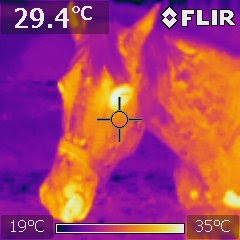
There are some limitations, as Infrared imaging cannot see within an object; only the infrared radiation measured at the surface. This, however, can be extremely valuable when taking measuerments with a probe. Infrared images of the hay storage can be gathered, from there a decision can be made on where to probe for the HIGHEST temperature possible.
Temperatures within oraganic materials vary greatly, untill now only an educated guess or blind probing would lead to the highest measured temperatures. With the use of infrared, another level of measurement is available; and a targeted strike can be carried out on the danger zones.
Lives have been lost and hay crops destroyed because of fires caused by spontaneous combustion. This year has been particularly bad for hay heating due to the hot humid weather. If the hay crop is put into the mow above 20-25% moisture content, spontaneous combustion may occur.
A hay crop that is placed too wet into a mow will heat rapidly. If the mow is so large that heat loss is restricted, the internal temperature will rise. As the temperature rises above 130°F (55°C), a chemical reaction occurs and may sustain itself. This reaction does not require oxygen, but the flammable gases produced are at a temperature above their ignition point. These gases will ignite when they come in contact with the air.
Check your hay regularly. If you detect a slight caramel odour or a distinct musty smell, chances are your hay is heating.
What do you do if you suspect that your hay is heating? First of all, make yourself a simple probe that can be inserted into the hay mass to check the temperature. A probe can be made from a 10 foot piece of electrical tubing. Rivet a hardwood pointed dowel to one end and drill 8 - 3/16 inch diameter holes in the tube just above the dowel. Drive the probe into the hay mass and lower a candy thermometer on a long string into the probe. The thermometer should be left for 10 minutes to ensure an accurate reading.
Watch for the following temperatures:
150°F (65°C) ** Entering the Danger Zone. Check temperature daily.
160°F (70°C) ** Danger! Measure temperature every four hours and inspect mow.
175°F (80°C) ** Call the Fire Department! Wet hay down and remove from the barn.
185°F (85°C) ** Hot Spots and Pockets May be Expected. Flames will likely develop when heating hay comes in contact with the air.
212°F (100°C) Critical! Temperature rise is rapid above this point. Hay will almost certainly ignite.

Caution: Before entering the mow, place long planks on top of the hay. Do not attempt to walk on the hay mass itself. Pockets may have already burned out under the hay surface. Always tie a rope around your waist and have a second person on the other end in a safe location to pull you out should the surface of the hay collapse into a fire pocket.
Extreme caution should be taken when fighting a hay fire if hay has been treated with chemical preservatives. Hay treated with preservatives containing ethoxyquin and BHT (butylated hydroxytoluene) will produce hydrogen cyanide gas at around 240°F (115°C). This gas is very deadly. Additives containing primarily propionic acid to not produce hydrogen cyanide during a fire.
Many farmers sprinkle salt on hay as it is stored, in an effort to prevent hay fires. However, tests have shown that salt has no effect on controlling spontaneous combustion. Dry ice, liquid nitrogen or carbon dioxide gas pumped into the hay will prevent combustion by eliminating the oxygen from the hay mass.
Spontaneous combustion is not an accident. By following good storage practices, not only will spontaneous combustion by avoided, but a higher quality of hay will be obtained.
Thermal Imaging can be utilized to assist in detecting spontaneous combustion temperatures before they become critical.

There are some limitations, as Infrared imaging cannot see within an object; only the infrared radiation measured at the surface. This, however, can be extremely valuable when taking measuerments with a probe. Infrared images of the hay storage can be gathered, from there a decision can be made on where to probe for the HIGHEST temperature possible.
Temperatures within oraganic materials vary greatly, untill now only an educated guess or blind probing would lead to the highest measured temperatures. With the use of infrared, another level of measurement is available; and a targeted strike can be carried out on the danger zones.
4.4.10
Equine Infrared Pictures- Fluke the horse...
Our subject today is a 21-year-old Arabian horse named Fluke (no connection with the brand). He proved to be a more than willing subject for some Thermal Imaging. An overall scan of his entire body was carried out, as well as some focus on areas of current issues.
During the winter months our subject lost some hair where his blanket caused some minor irritation. Our goal was to inspect these areas to ensure the healing process is still progressing without issue.
As well, Fluke has possessed a club-foot all of his life. Although he does not display any signs of discomfort whatsoever, we were curious to see if any underlying inflammation would be present. We performed a comparison with his other limbs and were quite thrilled to discover that there was virtually no sign of increased or decreased blood flow to that area. It appears as though his body had compensated extremely well.
Below are a few images of our happy subject on a fine spring day.
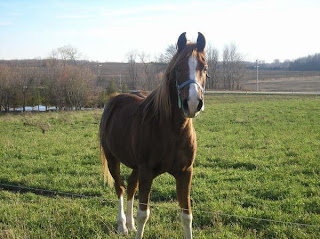

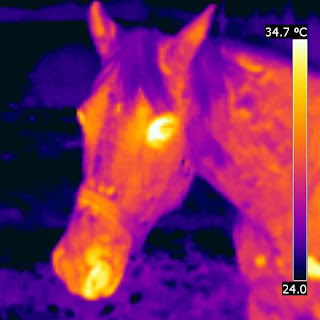
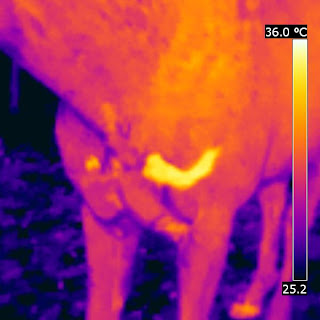
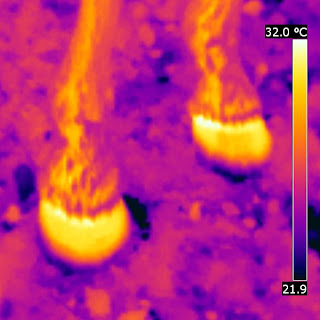

During the winter months our subject lost some hair where his blanket caused some minor irritation. Our goal was to inspect these areas to ensure the healing process is still progressing without issue.
As well, Fluke has possessed a club-foot all of his life. Although he does not display any signs of discomfort whatsoever, we were curious to see if any underlying inflammation would be present. We performed a comparison with his other limbs and were quite thrilled to discover that there was virtually no sign of increased or decreased blood flow to that area. It appears as though his body had compensated extremely well.
Below are a few images of our happy subject on a fine spring day.

Happy Boy

Curious about the camera

What Infrared sees

His patch healing nicely

Happy feet

Happy legs too...
28.3.10
How an Infrared Survey works for you
This post will explain how an Infrared Survey can save you money, go green and assist in solving other unique problems. Most commonly, a home or business owner contacts us to perform a survey on their home or business. An estimate of the time required to complete the survey is given, and the survey is performed.
The survey is carried out when the largest temperature delta possible is present, thereby giving the best possible thermal contrast for the imaging. The temperature delta is simply the difference between the interior and exterior temperatures of the structure. If the survey is for equipment maintenance/inspection, this is not necessary.
Infrared and non-infrared images are captured throughout the survey. Commonly the owner will be present throughout the procedure. This allows for any particular items of concern to be investigated fully, and known issues pointed out. Following the survey, Advanced Energy Solutions provides a full report outlining the areas of interest/concern. The owner can then contact the appropriate repair or inspection service to proceed with investigation of issues.
Issues commonly noted during a survey:
Electrical problems
Unconditioned air infiltration
Water intrusion/leakage
Ductwork problems
Insulation problems
Uneven air distribution
Etc
An Infrared Survey is not limited to the above. Other imaging and reporting can be provided to suit any customer’s requirements. Such as:
Imaging of Industrial equipment (electrical, mechanical, etc)
Hydro transmission systems
Pest Control (IR can see rodent nests, bee’s nests, etc within a structure)
Farm Survey (Barns, equipment, hay/straw storage etc)
Animals (horses, pets etc can be imaged for anomalies indicating discomfort/defect)
And many more!
See our other posts for examples if IR images and survey results.
Contact us via Email and get a sample report or set up a custom survey to suit your needs!
See the Advanced Energy Solutions article Thermal Imaging for home comfort
Back to Advanced Energy Solutions main site
The survey is carried out when the largest temperature delta possible is present, thereby giving the best possible thermal contrast for the imaging. The temperature delta is simply the difference between the interior and exterior temperatures of the structure. If the survey is for equipment maintenance/inspection, this is not necessary.
Infrared and non-infrared images are captured throughout the survey. Commonly the owner will be present throughout the procedure. This allows for any particular items of concern to be investigated fully, and known issues pointed out. Following the survey, Advanced Energy Solutions provides a full report outlining the areas of interest/concern. The owner can then contact the appropriate repair or inspection service to proceed with investigation of issues.
Issues commonly noted during a survey:
Electrical problems
Unconditioned air infiltration
Water intrusion/leakage
Ductwork problems
Insulation problems
Uneven air distribution
Etc
An Infrared Survey is not limited to the above. Other imaging and reporting can be provided to suit any customer’s requirements. Such as:
Imaging of Industrial equipment (electrical, mechanical, etc)
Hydro transmission systems
Pest Control (IR can see rodent nests, bee’s nests, etc within a structure)
Farm Survey (Barns, equipment, hay/straw storage etc)
Animals (horses, pets etc can be imaged for anomalies indicating discomfort/defect)
And many more!
See our other posts for examples if IR images and survey results.
Contact us via Email and get a sample report or set up a custom survey to suit your needs!
See the Advanced Energy Solutions article Thermal Imaging for home comfort
Back to Advanced Energy Solutions main site
21.3.10
Seeing the invisible world
People have compared using Infrared Thermography to having superpowers. Enabling us to see the invisible world all around us. At a glance qualitative asessments can be completed and either dismissed, or flagged for further quantitative investigation. Sometimes the anomalies observed are, in fact, a normal condition of operation. Others could be an indication of major problems or design weaknesses.
Below is panel observed daily with no issues noted or problems observed. Once Infrared Imaging is utilized to observe, an anomaly presents. Now the question is raised, is this a normal condition of the equipment? Or can a definative conclusion be made at all with the data available?
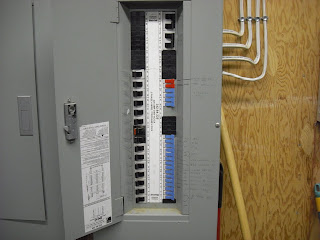
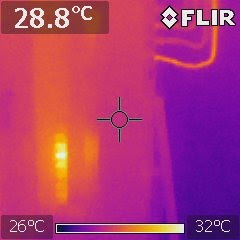

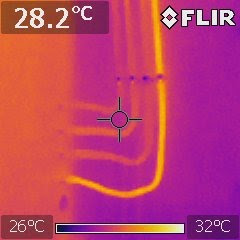
No attempt was made to adjust for Reflected Apparent Temp, or Emissivity in the photos. This is purely what a very quick scan of the panel yielded. Further investigation with current measurement will be carried out to verify the integrity of the system.
Below is panel observed daily with no issues noted or problems observed. Once Infrared Imaging is utilized to observe, an anomaly presents. Now the question is raised, is this a normal condition of the equipment? Or can a definative conclusion be made at all with the data available?

Panel Normal View

What the IR Camera sees

Visible

What IR can see
No attempt was made to adjust for Reflected Apparent Temp, or Emissivity in the photos. This is purely what a very quick scan of the panel yielded. Further investigation with current measurement will be carried out to verify the integrity of the system.
17.3.10
Thermography Experience
More and more people are purchasing infrared cameras lately. Advertising would have you believe that anyone can perform Thermography. Routinely advertisers will state that you can be performing inspections right away with no experience. Nothing could be further from the truth.
I will admit that the new IR cameras are extremely user friendly. Functions such as basic Emissivity adjustment that only has a minimal list of finish types instead of numbers, allow a new user to get a more believable measurement. Although the number is more believable- it is usually not accurate.
Experienced Thermographers have a skillset which enables them to interpret what they are seeing on the camera, make necessary adjustments to compensate for many variables, dismiss what is invalid or caused by other factors (reflections, sun load, air movement etc), and provide you with a report containing relevant data.
See below for an example of reflections causing invalid data.


I will admit that the new IR cameras are extremely user friendly. Functions such as basic Emissivity adjustment that only has a minimal list of finish types instead of numbers, allow a new user to get a more believable measurement. Although the number is more believable- it is usually not accurate.
Experienced Thermographers have a skillset which enables them to interpret what they are seeing on the camera, make necessary adjustments to compensate for many variables, dismiss what is invalid or caused by other factors (reflections, sun load, air movement etc), and provide you with a report containing relevant data.
See below for an example of reflections causing invalid data.

Standard 3 Phase Contactor- Note the steel backdrop

Another area closeby- Note the anomoly (7.7 deg)

Same but in Greyscale
Gues what.....


Pay no attention to the man behind the mask...
The anomaly was entirely caused by the Thermographer himself (me). Many materials act just like a mirror to Infrared Radiation. The increased temperature observed was actually the reflection of the imager wearing flash protection PPE.
Without knowing what they are looking for, an inexperienced Thermographer can get led astray very quickly. If you enlist the services of an experienced IR Thermographer, you won't be disappointed.
Without knowing what they are looking for, an inexperienced Thermographer can get led astray very quickly. If you enlist the services of an experienced IR Thermographer, you won't be disappointed.
16.3.10
Home Thermography examples
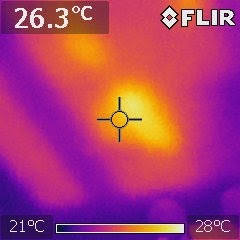
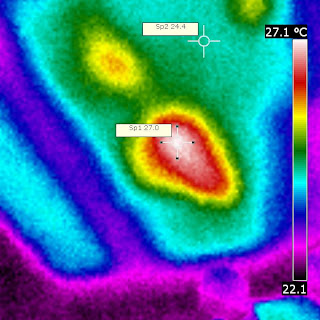
A couple examples of some anomalies noted during some recent IR Imaging. Sometimes when imaging we notice blatent visible damge leading to further investigation and problem areas noted, sometimes I am totally taken by surpirse...
Defenitely keeps this field interesting.


Back to Advanced Energy Solutions main site
Defenitely keeps this field interesting.

Can you spot the water damage?

There it is...

Looking at a ceiling

Interesting....

Image now formatted and palette changed
Back to Advanced Energy Solutions main site
10.3.10
Advanced Energy Solutions
The Site has finally been activated. First a little background; Advanced Energy Solutions is based in Goderich Ontario Canada.
Advanced Energy Solutions provides professionial Thermography (Infared Imaging). The images capture what human eyes cannot see. No other method of non-destructive testing reveals what Thermography can.
Advanced Energy Solutions uses world-class FLIR infared imaging equipment.
The services most commonly provided are:
1. Home imaging- Energy Loss, Electrical components, Water intrusion, mould, general air movement etc.
2. Industrial imaging- Heat Loss, electrical imaging (too vast to list), motors, gearboxes etc.
The services provided by a thermographer extend far beyond the above as well;
- Imaging of Hydro transmission lines and substations
- Imaging of pets, farm animals etc provide locations of temperature anomolies indicating a problem
- Pest control (animals cannot hide from infared)
- Lost pet location
- Custom IR inspections
- Anything else you can think of...
Update see my new post on the equipment; FLIR i7 used by Advanced Energy Solutions.
Back to Advanced Energy Solutions main site
Advanced Energy Solutions provides professionial Thermography (Infared Imaging). The images capture what human eyes cannot see. No other method of non-destructive testing reveals what Thermography can.
Advanced Energy Solutions uses world-class FLIR infared imaging equipment.
The services most commonly provided are:
1. Home imaging- Energy Loss, Electrical components, Water intrusion, mould, general air movement etc.
2. Industrial imaging- Heat Loss, electrical imaging (too vast to list), motors, gearboxes etc.
The services provided by a thermographer extend far beyond the above as well;
- Imaging of Hydro transmission lines and substations
- Imaging of pets, farm animals etc provide locations of temperature anomolies indicating a problem
- Pest control (animals cannot hide from infared)
- Lost pet location
- Custom IR inspections
- Anything else you can think of...
Update see my new post on the equipment; FLIR i7 used by Advanced Energy Solutions.
Back to Advanced Energy Solutions main site
Subscribe to:
Posts (Atom)


 Posts
Posts

